In this article
Erections depend on blood flow, nerve signals, hormones, and psychological arousal working together. Erectile dysfunction can arise when one or more of those systems is affected. Prescription treatments such as sildenafil and tadalafil are established options; researchers have also studied ingredients including L-arginine and ashwagandha. The useful question is specific: what did each study test, at what dose, and in which men?
This article examines the nitric-oxide role of L-arginine, the hormone and stress research on ashwagandha, and what those findings mean for men considering supplements.
What Causes Erectile Dysfunction
Healthy erectile function depends on a coordinated sequence of events: sexual desire originates in the brain, neural signals travel to the penile vasculature, nitric oxide is released from endothelial cells, smooth muscle relaxes, blood flow increases, and an erection is achieved. Any breakdown in this sequence — hormonal, vascular, neurological, or psychological — can impair function.
The major causes of erectile dysfunction in modern men:
- Vascular issues — impaired blood flow due to endothelial dysfunction, atherosclerosis, or reduced nitric oxide production
- Hormonal decline — low testosterone affecting both desire and physiological response
- Stress and anxiety — potentially disrupting arousal and contributing to erectile difficulties without necessarily indicating a hormone disorder.
- Diabetes and metabolic dysfunction — damaging both vascular and neural pathways
- Psychological factors — performance anxiety, depression, relationship issues
- Medications — antidepressants, blood pressure drugs, and others with sexual side effects
- Lifestyle factors — sedentary behavior, poor sleep, obesity, alcohol use
Vascular disease, diabetes, medications, low testosterone, and psychological factors can overlap. Identifying the contributors matters because no single ingredient combination addresses every cause of ED.
L-Arginine: The Nitric Oxide Connection
L-Arginine is an amino acid that serves as the precursor to nitric oxide (NO), the molecule responsible for vasodilation in the penile vasculature. Without adequate nitric oxide, the smooth muscle in the corpus cavernosum can't relax, blood can't flow in, and an erection can't form. Nitric oxide is the literal foundation of erectile function.
The mechanism:
- L-Arginine is converted to nitric oxide by the enzyme nitric oxide synthase (NOS)
- Nitric oxide diffuses into smooth muscle cells of the corpus cavernosum
- This triggers a cascade that relaxes smooth muscle and allows blood flow
- Increased blood flow produces and sustains an erection
PDE5 inhibitors preserve cyclic GMP, a signaling molecule in the nitric-oxide pathway; they do not stop nitric oxide itself from breaking down. L-arginine supplies material used to make nitric oxide. Sharing a pathway does not make the treatments interchangeable or establish that combining them is appropriate.
The Clinical Evidence for L-Arginine
Randomized trials have studied oral L-arginine in men with ED, with different doses and results:
- A randomized, double-blind trial assigned 98 men with vasculogenic ED to 6 g/day of L-arginine or placebo for three months. Erectile-function scores improved with L-arginine. The findings concern this relatively high dose and this study population.
- A 1999 study published in BJU International tested 5 g/day of L-arginine for 6 weeks in 50 men with organic ED in a double-blind, placebo-controlled design, measuring nitric oxide metabolites in plasma and urine.
- A 2023 systematic review and meta-analysis in Frontiers in Endocrinology examined L-arginine in combination with Pycnogenol (maritime pine bark extract) for erectile dysfunction, with the combination showing significant improvements in sexual function.
The studies discussed here used gram-level doses: 5 g/day in the Chen trial and 6 g/day in the Menafra trial. A separate 1.5 g/day crossover trial did not find a significant benefit. Testostemem contains 300 mg per daily serving, which is below those research doses.
Ashwagandha: The Hormonal Foundation
Ashwagandha research examines stress, sleep, testosterone, and aspects of sexual health. These are distinct outcomes; improvement in one does not establish an erectile-function benefit.
Ashwagandha (Withania somnifera) is an adaptogenic herb used in Ayurvedic medicine for over 3,000 years. Modern research has documented its effects on multiple systems relevant to male sexual function:
- Testosterone: an eight-week KSM-66 trial alongside resistance training found a greater mean testosterone increase than placebo. The study used 600 mg/day.
- Cortisol: one 60-day trial in stressed adults found a 27.9% reduction with KSM-66 versus 7.9% with placebo.
- Stress and anxiety: some preparations have evidence for stress reduction. Evidence for treating anxiety is less clear.
- Sleep: some ashwagandha preparations have been studied for insomnia. Sleep and testosterone follow linked daily rhythms; testosterone production is not confined to deep sleep.
- Sexual health: studies have examined selected fertility and sexual-health outcomes. Sperm measurements, libido, and erectile function are different endpoints.
Withanolides are among the constituents studied in ashwagandha extracts. Proposed mechanisms include effects on stress signaling, but clinical trials do not establish one universal cortisol-to-testosterone mechanism.
Why Researchers Consider These Ingredients Together
The rationale involves two areas of biology:
- Ashwagandha has ingredient research on stress and testosterone in specific populations.
- L-Arginine provides the substrate for the physiological mechanism (nitric oxide production for blood flow)
Those research areas touch several parts of sexual function:
- Desire and motivation — influenced by hormones, mood, relationships, and context.
- Stress response — one area studied in ashwagandha trials.
- Blood flow and vasodilation — processes that involve nitric oxide.
- Smooth muscle relaxation — part of the physical erection response.
An ingredient’s biological role does not identify the cause of a man’s ED. A clinician can investigate vascular, hormonal, medication-related, and psychological contributors and recommend treatment accordingly.
What the Research Says About the Combination
A 2019 meta-analysis included ten randomized trials with 540 men and reported improved erectile-function outcomes with arginine supplements at 1.5–5 g/day compared with placebo or no treatment. Some trials used combinations. Those results do not establish the effect of ashwagandha plus L-arginine or a 300 mg L-arginine serving.
The trials cited here do not establish an additional ED benefit from combining ashwagandha with L-arginine. Evidence for one ingredient, or for L-arginine paired with a different compound, does not establish the effect of this particular combination.
How to Interpret the Research Doses
The amounts studied are useful context, not a self-treatment prescription:
- Ashwagandha: the KSM-66 testosterone trial used 300 mg twice daily. Different branded extracts have different preparations and should not be assumed equivalent.
- L-arginine: the trials highlighted here used 5–6 g/day; the Testostemem serving provides 300 mg.
- Duration: studies used specific periods ranging from weeks to months. There is no established response timeline for this ingredient combination.
Regular activity, adequate sleep, stress management, and care for blood pressure or diabetes can support sexual health. Supplements should be considered in that context, with attention to medications and the cause of symptoms.
Where Supplements Fit Alongside Medical Care
Ashwagandha and L-arginine are not established first-line treatment for ED. Persistent erectile difficulties deserve assessment, including in younger men, because they can accompany vascular disease, diabetes, medication effects, or other conditions.
A clinician can discuss established options such as PDE5 inhibitors and address contributing health conditions. Treatment should reflect the cause and the individual, rather than age or symptom severity alone.
The Integrated Approach for Male Sexual Performance
A useful approach to erectile difficulties considers these areas together:
- Hormonal assessment — when symptoms and history suggest testosterone deficiency.
- Vascular health — activity, smoking status, blood pressure, diabetes, and appropriate treatment.
- Lifestyle inputs — sleep, training, stress management, body composition
- Medical evaluation — a history, examination, and tests chosen for the individual.
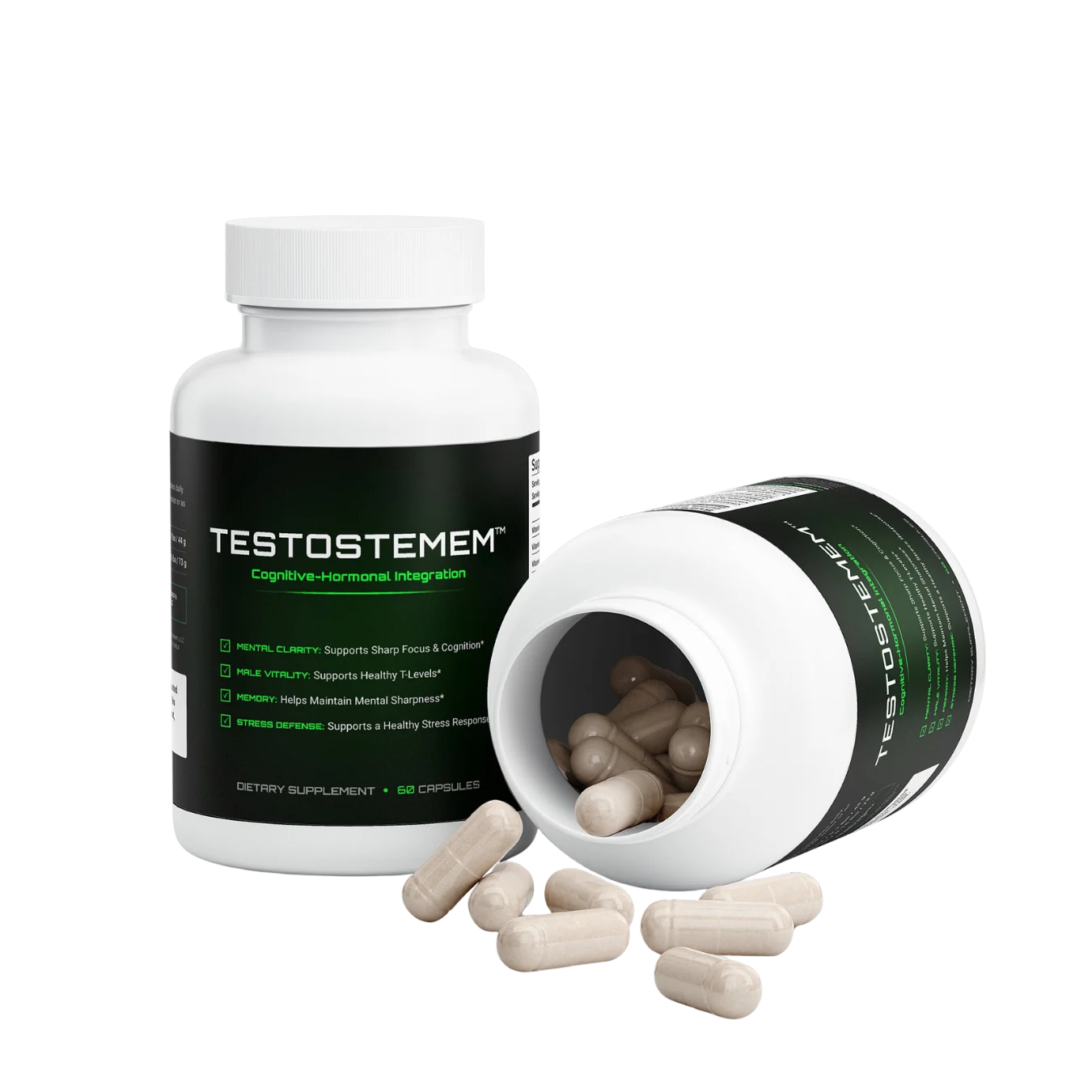
Testostemem brings testosterone and memory support into one disclosed daily formula. It contains 600 mg KSM-66 and 300 mg L-arginine per serving. The ingredient studies are available on our science page so you can compare the amounts and outcomes for yourself.
Frequently Asked Questions About Ashwagandha and L-Arginine for Erectile Function
Does L-arginine actually work for erectile dysfunction?
Some trials at gram-level doses report improvement in men with vasculogenic ED. Results vary with the dose, preparation, and population; a 1.5 g/day crossover trial found no significant benefit. These results do not establish an ED effect for the 300 mg in Testostemem.
How does ashwagandha help with erectile function?
Ashwagandha has been studied for stress and testosterone, which are relevant to sexual health. Those findings are not the same as demonstrating that it treats erectile dysfunction.
Can I take ashwagandha and L-arginine together?
A clinician or pharmacist can check whether either ingredient fits your health history and medications. L-arginine can interact with medicines that lower blood pressure, and a combined ED benefit has not been established.
How long does it take ashwagandha and L-arginine to work for ED?
There is no established timeline for this combination to improve ED. Individual trials tested specific ingredients and doses over weeks or months; persistent symptoms should be assessed rather than waiting for a supplement response.
Are ashwagandha and L-arginine safe?
Ashwagandha can cause gastrointestinal symptoms and drowsiness, has been linked to rare liver injury, and can interact with medicines. Long-term safety is not well established. L-arginine can cause gastrointestinal effects and interact with blood-pressure medicines, nitrates, or ED medicines. Review the combination with a clinician or pharmacist.
KEEP READING
Sources & further reading.
- NIDDK: Erectile dysfunction symptoms and causes
- NCCIH: Ashwagandha evidence and safety
- Wankhede et al. (2015): Ashwagandha with resistance training
- Chandrasekhar et al. (2012): Ashwagandha stress trial
- Klotz et al. (1999): L-arginine controlled crossover trial
- Chen et al. (1999): High-dose L-arginine erectile-function trial
- Menafra et al. (2022): 6 g L-arginine randomized trial
- Rhim et al. (2019): Arginine supplements for erectile dysfunction meta-analysis
- Leproult and Van Cauter (2011): Sleep restriction and testosterone
TESTOSTERONE + MEMORY
Sharp mind.
Strong drive.
Testostemem brings eight ingredients together for testosterone and memory. Two capsules a day. That's it. No worries.
GET TESTOSTEMEM 60-day money-back guarantee on your first order.