In this article
Testosterone helps maintain sexual function, muscle, bone, and other aspects of health. If you feel a change in energy or libido, investigate the cause rather than assuming that modern life has damaged your hormone production.
Lifestyle can address some reversible contributors to low testosterone. The response varies, and a diagnosed hormone disorder may need medical treatment. This guide explains the relevant habits and how to assess supplement claims.
Why Natural Testosterone Matters More Than You Think
Testosterone isn't just about muscle and sex drive. It governs:
- Energy and mood — symptoms can occur with deficiency but are not specific to it.
- Body composition — testosterone has roles in muscle and fat tissue.
- Brain biology — it acts in memory-related regions, without establishing that higher levels improve cognition.
- Mood — changes can coexist with deficiency but should not automatically be attributed to hormones.
- Metabolic health — hormone levels interact with health conditions; increasing testosterone is not a general heart-health strategy.
The goal is appropriate care for your health, not maximizing testosterone regardless of symptoms and context.
Symptoms That May Warrant Assessment
Fatigue, reduced libido, fewer spontaneous erections, or changes in strength can warrant discussion with a clinician. Brain fog, mood, and sleep problems also have many possible causes. A symptom cluster cannot establish low testosterone; diagnosis combines clinical findings with repeat morning blood tests.
How to Increase Testosterone Naturally Through Diet
Adequate nutrition matters, without a universal testosterone diet:
- Include dietary fat within a balanced diet rather than increasing saturated fat specifically to raise hormones.
- Meet protein needs appropriate to your activity, age, and health.
- Choose carbohydrate intake that supports your needs and training rather than assuming every low-carbohydrate diet suppresses testosterone.
- Address confirmed nutrient deficiencies rather than assuming most men share the same deficiency.
- Prioritize a varied diet; seed oils are not established as a general cause of testosterone deficiency.
Diet supports health without guaranteeing a particular laboratory result.
Strength Training for Health and Function
Resistance training builds strength and physical function. Temporary hormone changes after exercise do not prove a lasting increase in resting testosterone.
What works:
- Compound, multi-joint lifts as the core of every session.
- Choose loads and repetitions suited to your experience and goals.
- Allow sufficient rest for technique and recovery.
- Set a sustainable frequency; there is no universal five-session threshold for hormone suppression.
Aerobic exercise also supports health. Under-fueling and inadequate recovery can be problems, but running or cycling does not inherently lower testosterone.
Sleep and Testosterone
Sleep affects hormone rhythms. A small experiment in ten young men found lower daytime testosterone after a week of restricted sleep. This is a reason to protect sleep, not a guarantee that everyone will see the same change.
Useful sleep habits include:
- 7–9 hours of sleep per night.
- Consistent sleep and wake times.
- A cool, dark, quiet room.
- No screens for 30–60 minutes before bed.
- Consider the effect of alcohol on sleep and avoid using it as a sleep aid.
Persistent sleep problems or suspected sleep apnea deserve assessment.
Stress, Cortisol, and Testosterone
Stress and hormone regulation interact, but cortisol and testosterone do not obey a fixed inverse rule in every individual. Address stress for its effects on sleep, mood, and daily function.
Practical ways to support recovery include:
- Daily walks, ideally outdoors.
- Physical activity suited to your health and recovery.
- Breathwork or meditation, even 10 minutes a day.
- Relaxation practices that work for you; heat or cold exposure is not a testosterone requirement.
- Cutting alcohol to minimal levels.
- Saying no to commitments that drain you without paying back.
Body Composition and Natural Testosterone Levels
Obesity is associated with low testosterone in some men. Appropriate weight loss can improve obesity-related hormone changes, through mechanisms more complex than conversion to estrogen alone.
Set an individualized goal with attention to nutrition and strength. A body-fat percentage range is not a universal hormone target.
How to Evaluate Testosterone Supplements
Evidence varies across ingredients and products. Check the exact preparation and the outcome studied:
- Vitamin D — important for nutritional status; supplementation has not consistently increased testosterone in randomized trials.
- Zinc and magnesium — essential nutrients; correcting a deficiency is different from taking extra amounts to boost hormones.
- Boron — limited evidence does not establish a predictable testosterone benefit.
- Tongkat ali — one of the few herbal compounds with real human data on raising testosterone.
- Ashwagandha — specific extracts have shown hormone changes in selected trials, including one alongside resistance training.
- Fenugreek — results vary by preparation and outcome; do not assume equivalence between products.
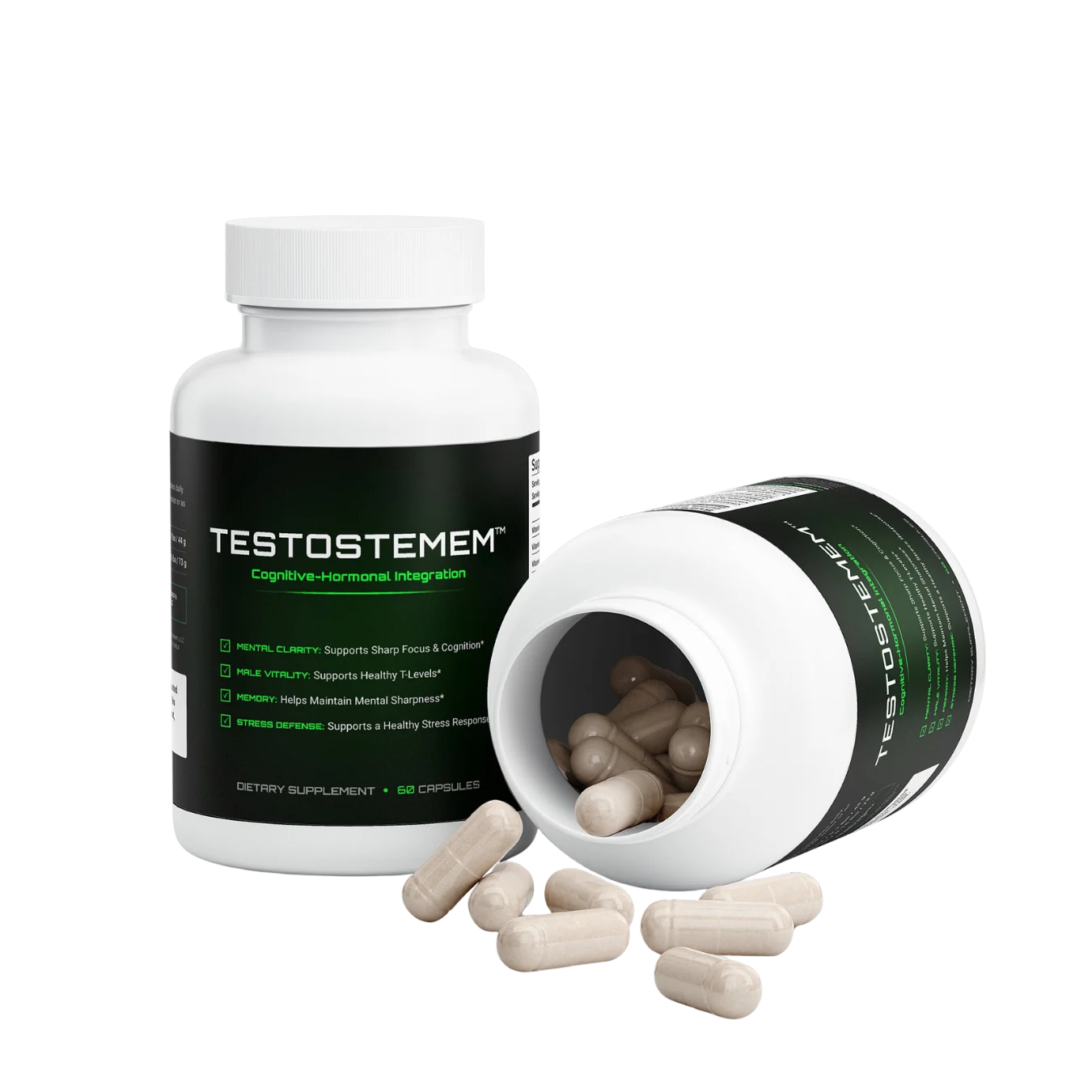
Testostemem lists every ingredient amount and brings natural testosterone support and memory support together. Its ingredient research can be inspected, but does not establish an amplifying effect or a treatment for deficiency.
Frequently Asked Questions About Naturally Increasing Testosterone
How long does it take to naturally increase testosterone?
There is no established timetable for every man. The response depends on the starting cause and the intervention.
Can you naturally increase testosterone after 40?
Some reversible contributors to low testosterone can be addressed after forty, but a dramatic increase is not guaranteed or necessary for everyone.
What is the fastest way to boost testosterone naturally?
Identify the cause of a low result. Sleep, nutrition, weight, and medicines may be relevant, but there is no universal fastest method.
Do natural testosterone boosters really work?
Some ingredients have human studies; evidence does not automatically transfer to a finished blend or to everyone who takes it.
Is it better to naturally increase testosterone or use TRT?
The choice depends on diagnosis, cause, benefits, risks, and fertility plans. Supplements are not a required first step, and TRT should be discussed as a medical treatment rather than a universal lifelong commitment.
KEEP READING
Sources & further reading.
- Endocrine Society: Hypogonadism in men
- Endocrine Society: Testosterone therapy clinical practice guideline
- Resnick et al. (2017): Testosterone treatment and cognitive function
- Leproult and Van Cauter (2011): Sleep restriction and testosterone
- Wankhede et al. (2015): Ashwagandha with resistance training
- Lerchbaum et al. (2019): Vitamin D trial in men with low testosterone
- NIH ODS: Zinc fact sheet
- NIH ODS: Magnesium fact sheet
- NIMH: Depression
TESTOSTERONE + MEMORY
Sharp mind.
Strong drive.
Testostemem brings eight ingredients together for testosterone and memory. Two capsules a day. That's it. No worries.
GET TESTOSTEMEM 60-day money-back guarantee on your first order.