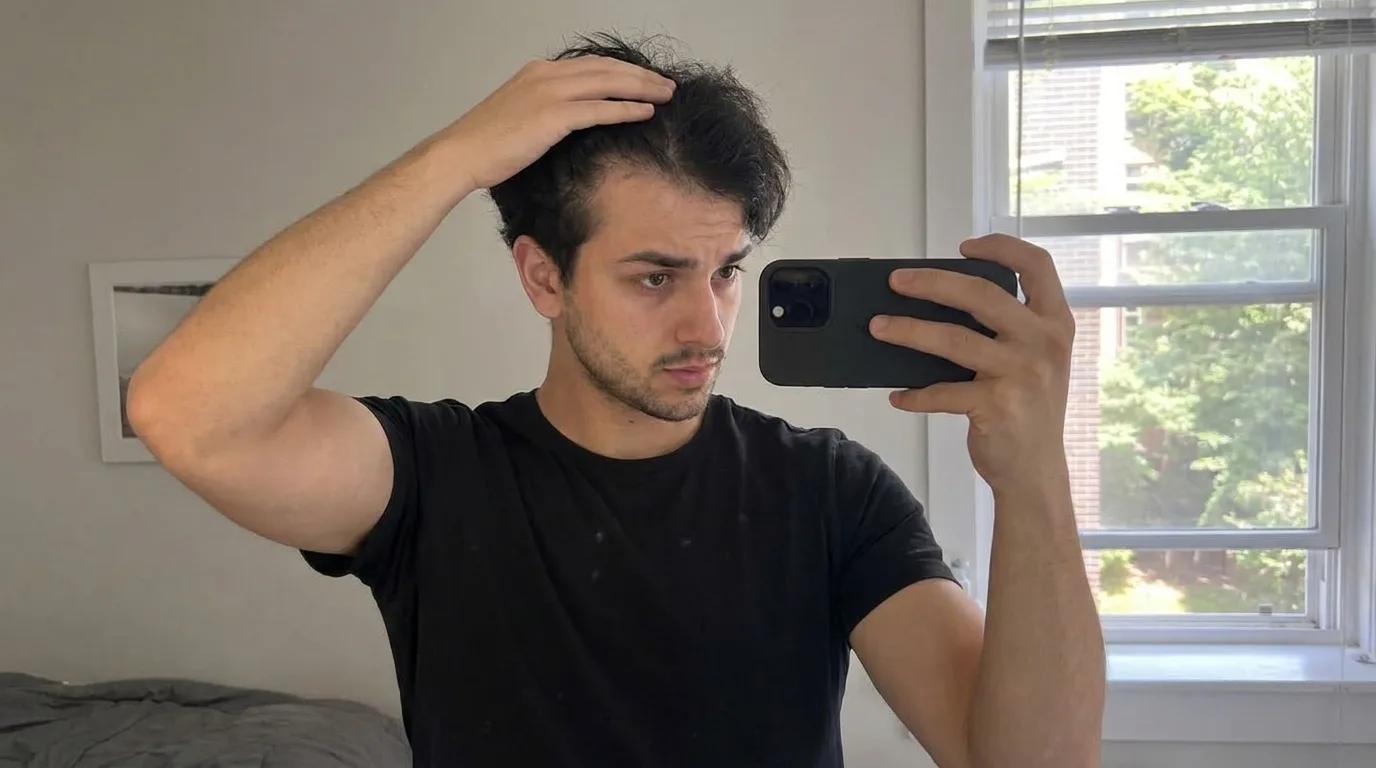
Low testosterone does not directly cause hair loss — and this is one of the most misunderstood topics in men's health. Male pattern baldness is driven primarily by DHT (dihydrotestosterone), a byproduct of testosterone, combined with a genetic sensitivity to it. This is why some men with high testosterone go bald and some men with low testosterone keep a full head of hair. The relationship between testosterone, DHT, and hair loss is more nuanced than the common myth suggests. This article explains what actually causes male hair loss, the real role of testosterone and DHT, and what the science says.
If you're losing your hair and wondering whether it's a testosterone problem, the answer is probably not what you've been told. Here's the truth about testosterone, DHT, and hair loss.
Does Low Testosterone Cause Hair Loss?
Low testosterone does not directly cause male pattern baldness. In fact, the relationship is often the opposite of what people assume — male pattern hair loss is driven by DHT, a derivative of testosterone, acting on genetically sensitive hair follicles. Men with low testosterone can still lose hair, and men with high testosterone can keep theirs, because the deciding factors are DHT and genetic sensitivity, not testosterone levels themselves.
The common myth is that low testosterone causes baldness or that high testosterone causes baldness. Both are oversimplifications. What actually matters is:
- How much testosterone gets converted to DHT
- How sensitive your hair follicles are to DHT (which is genetic)
- Not your absolute testosterone level
This is why you can't predict a man's hairline from his testosterone level, and why "getting your testosterone checked" isn't the answer to male pattern baldness that many men assume it is.
What Is DHT and How Does It Cause Hair Loss?
DHT (dihydrotestosterone) is a more potent androgen made from testosterone by the enzyme 5-alpha-reductase. In men who are genetically predisposed, DHT binds to receptors in hair follicles on the scalp and gradually shrinks them through a process called miniaturization — causing hair to grow back thinner and shorter over time until it stops growing altogether.
Here's how DHT drives male pattern baldness:
- Testosterone converts to DHT via the 5-alpha-reductase enzyme
- DHT binds to androgen receptors in scalp hair follicles
- In genetically sensitive follicles, this binding triggers miniaturization
- Follicles shrink with each growth cycle, producing progressively thinner hair
- Eventually the follicle stops producing visible hair
The key factor is genetic sensitivity. The same DHT level causes baldness in one man and does nothing to another's hairline, because the follicle's sensitivity to DHT is inherited. This is why male pattern baldness runs in families.
Why Do Some High-Testosterone Men Go Bald and Some Low-T Men Don't?
This apparent paradox is explained by the fact that DHT sensitivity, not testosterone level, determines hair loss. A man with high testosterone but low follicle sensitivity keeps his hair, while a man with lower testosterone but high follicle sensitivity loses his. The genetics of the hair follicle matter more than the amount of circulating testosterone.
The factors that actually determine hair loss:
- Genetic follicle sensitivity to DHT — the primary determinant, inherited from your family
- 5-alpha-reductase activity — how much testosterone gets converted to DHT
- Androgen receptor sensitivity in the scalp
None of these are the same as your total testosterone level. This is why the "bald men have more testosterone" stereotype is a myth — baldness reflects DHT sensitivity, not raw testosterone. A man can have perfectly average testosterone and go bald young, or high testosterone and never lose a hair.
Can Low Testosterone Cause Other Types of Hair Changes?
While low testosterone doesn't cause male pattern baldness, it can contribute to other changes in body and facial hair. Testosterone supports the growth of body hair, facial hair, and its overall thickness, so low testosterone can lead to reduced body and facial hair even as it has no direct role in scalp balding.
The distinction that matters:
- Scalp hair (male pattern baldness): driven by DHT and genetics, not testosterone level
- Body and facial hair: supported by testosterone, so low testosterone can reduce their growth and thickness
- General hair health: severe hormonal imbalances or deficiencies can affect hair quality, but this is separate from pattern baldness
So a man with low testosterone might notice thinner body hair or slower beard growth — but that's different from the scalp hair loss of male pattern baldness, which follows the DHT-genetic pathway regardless of testosterone level.
Does Raising Testosterone Cause Hair Loss?
Raising testosterone can potentially accelerate hair loss in men who are genetically predisposed, because more testosterone can mean more DHT. This is a real consideration for men on testosterone replacement therapy who carry the genetics for male pattern baldness — but it only affects men who are already genetically susceptible.
The nuance:
- In genetically susceptible men, raising testosterone can increase DHT and potentially speed up hair loss that was going to happen anyway
- In men without the genetic sensitivity, raising testosterone won't cause baldness regardless of DHT levels
- Natural testosterone support through lifestyle generally produces more modest changes than pharmaceutical TRT
For men worried about this, the genetic factor is the deciding one. If male pattern baldness runs in your family and you're susceptible, that's the relevant consideration — not testosterone optimization in isolation.
What Actually Helps With Male Hair Loss?
Since male pattern baldness is driven by DHT and genetics, the treatments that work target DHT or stimulate follicles — not testosterone levels. The evidence-based options:
- DHT-blocking medications (such as finasteride) reduce the conversion of testosterone to DHT, which can slow or partially reverse pattern baldness in some men
- Topical treatments (such as minoxidil) stimulate hair follicles and prolong the growth phase
- Follicle-supporting approaches including certain procedures and therapies
- Addressing nutritional deficiencies that can worsen hair shedding (separate from pattern baldness)
Note that none of these involve raising or lowering testosterone. Because the mechanism is DHT and genetics, testosterone-focused interventions aren't the answer to male pattern baldness. Men experiencing significant hair loss should consult a doctor or dermatologist about the DHT-targeted options.
Understanding the Real Picture
The testosterone-hair loss myth causes a lot of confusion and leads men to chase the wrong solutions. Understanding that DHT sensitivity and genetics drive male pattern baldness — not testosterone levels — helps you focus on what actually matters, both for your hair and for your hormonal health.
For men focused on testosterone for its real benefits — energy, drive, cognitive function, mood, body composition — the hair loss question is largely separate. Testostemem is built around the testosterone-cognition connection that governs how sharp, driven, and capable a man feels, supporting natural testosterone production and the mental performance that depends on it. The formula addresses the hormonal substrate underneath low energy and brain fog. Hair loss follows its own DHT-genetic pathway, but for the wide range of things healthy testosterone actually does support, addressing the hormonal foundation is what matters.
Frequently Asked Questions About Testosterone and Hair Loss
Does low testosterone cause hair loss?
No, low testosterone does not directly cause male pattern baldness. Baldness is driven by DHT (a testosterone byproduct) acting on genetically sensitive hair follicles. Men with low testosterone can still go bald, and men with high testosterone can keep their hair, because genetics and DHT sensitivity are the deciding factors.
Does high testosterone cause baldness?
Not directly. The "bald men have high testosterone" idea is a myth. Baldness reflects genetic sensitivity to DHT, not the amount of testosterone. A man with high testosterone but low follicle sensitivity keeps his hair, while a genetically susceptible man can go bald at any testosterone level.
What actually causes male pattern baldness?
Male pattern baldness is caused by DHT (dihydrotestosterone) binding to genetically sensitive hair follicles and gradually shrinking them. The primary determinant is inherited follicle sensitivity to DHT, which is why baldness runs in families.
Will raising my testosterone make me go bald?
Only if you're genetically predisposed to male pattern baldness. Raising testosterone can increase DHT, which may accelerate hair loss in susceptible men. In men without the genetic sensitivity, raising testosterone won't cause baldness regardless of DHT.
Can fixing low testosterone regrow my hair?
No. Since testosterone level isn't what causes male pattern baldness, raising it won't regrow hair lost to the DHT-genetic pathway. Treatments that work target DHT (like finasteride) or stimulate follicles (like minoxidil), not testosterone levels.