In this article
Stress, sleep, cortisol, and testosterone interact, but they do not move in a simple seesaw. Sustained excess glucocorticoid exposure can suppress reproductive hormone signaling; everyday stress does not automatically mean high cortisol or low testosterone. Fatigue, brain fog, and reduced libido can have several causes. Here is how to understand the relationship without guessing from symptoms.
If you feel persistently stressed, tired, or mentally foggy, start with the whole picture: sleep, workload, mood, medications, and physical health. Hormones may be part of that assessment.
What Is the Relationship Between Cortisol and Testosterone?
Cortisol and testosterone are steroid hormones regulated by different, interacting systems. High glucocorticoid exposure can affect testosterone production, but a single cortisol rise does not predict a testosterone fall.
The relationship works through several mechanisms:
- Separate steroid-producing tissues. Both hormones ultimately derive from cholesterol, but the claim that ordinary stress steals a shared pool of hormone precursors is not an established explanation for low testosterone.
- Hormone signaling. The stress-response and reproductive hormone systems interact. Sustained excess glucocorticoid exposure can reduce reproductive signaling.
- Testicular effects. Experimental research also examines glucocorticoid effects on testosterone synthesis; this does not diagnose a cortisol problem from day-to-day symptoms.
Stress can affect hormonal health directly and through sleep, eating, exercise, and illness. The size and direction of an individual’s hormone changes require measurement.
How Does Cortisol Lower Testosterone?
Cortisol is a normal, necessary hormone. Excess exposure can affect reproductive signaling, but ordinary work or relationship stress does not establish persistent cortisol excess or testosterone deficiency.
When glucocorticoid exposure is excessive, potential effects include:
- Changes in the stress-response system and its interaction with reproductive signaling.
- Reduced hypothalamic-pituitary signals involved in reproduction.
- Reduced LH means the testes get less signal to produce testosterone
- Effects on testicular steroid production.
- Possible testosterone reduction, depending on the cause and degree of exposure.
Cortisol normally changes across the day and in response to challenges. Persistent pathological excess is different from feeling stressed and requires specific clinical evaluation.
What Are the Symptoms of High Cortisol and Low Testosterone?
Fatigue, poor concentration, low libido, and sleep problems can occur with several conditions. The following symptoms are reasons to investigate, not proof that cortisol is high or testosterone is low:
- Persistent fatigue, especially "wired but tired" exhaustion
- Brain fog, memory slips, and difficulty concentrating
- Reduced libido and weaker erections
- Loss of motivation and drive
- Mood flattening, irritability, anxiety
- Difficulty losing belly fat despite effort
- Poor sleep and difficulty recovering from training
- Loss of muscle and strength
If several symptoms persist, discuss them with a clinician. Sleep problems, depression, medications, anemia, thyroid disease, and testosterone deficiency are among the possible contributors; there may be more than one.
How Does Cortisol Affect Memory and Brain Function?
Stress hormones influence memory processing, with effects that depend on timing, duration, and context. The hippocampus is involved in memory and is sensitive to stress signaling, but feeling foggy does not show that this region has been damaged.
Researchers examine several connections between stress and cognition:
- Hippocampal function. Chronic stress and glucocorticoid exposure have been studied in relation to memory and hippocampal structure.
- Memory processing. Stress can influence encoding, consolidation, and recall differently depending on when it occurs.
- Hormone interactions. Human observational research has examined testosterone and cortisol together in relation to hippocampal volume and memory. Associations do not establish the cause of an individual’s symptoms.
Stress can disrupt attention and sleep, both of which affect memory. It is useful to address those problems directly without assuming that every cognitive complaint is a testosterone problem.
How Do You Support Stress Recovery and Hormonal Health?
Start with habits that support health and functioning, rather than trying to force a particular cortisol number:
Address ongoing stressors. Therapy, practical boundaries, social support, and changes to workload can help reduce the burden of chronic stress.
Protect sleep. Aim for a consistent schedule and enough time to rest. Persistent insomnia, loud snoring, or daytime sleepiness deserve attention.
Balance training and recovery. Resistance exercise benefits strength and function. Adequate food, rest, and a sustainable program matter more than chasing a short-lived hormone spike.
Use practices you can sustain. Walking, relaxation, time outdoors, and breathing exercises can help manage stress, whether or not a cortisol measurement changes.
Inspect ingredient research. In a 60-day stressed-adult trial, KSM-66 at 600 mg/day reduced cortisol by 27.9% versus 7.9% with placebo. A separate resistance-training trial measured testosterone. Those studies did not establish a universal hormone-reset effect.
Review alcohol use and health conditions. Heavy drinking and poorly managed illness can affect sleep, mood, and hormonal health.
Recovery depends on what is causing the symptoms. There is no established 8–16-week schedule in which lowering cortisol reliably restores testosterone, memory, and drive.
When Should You Get Your Cortisol and Testosterone Tested?
Persistent symptoms warrant a clinical review. Suspected testosterone deficiency is assessed with symptoms and repeated morning measurements. Cortisol testing is selected when a clinician suspects a particular adrenal condition; a random morning value or commercial daily profile is not a general test for everyday stress.
Testing helps answer a specific clinical question. It should not be used to assume one hormone imbalance explains every symptom.
A Practical Approach to Stress and Hormonal Health
Stress, sleep, mood, and physical health can reinforce one another. Improving one area may help the others, but the response is individual and does not prove a self-sustaining cortisol–testosterone loop.
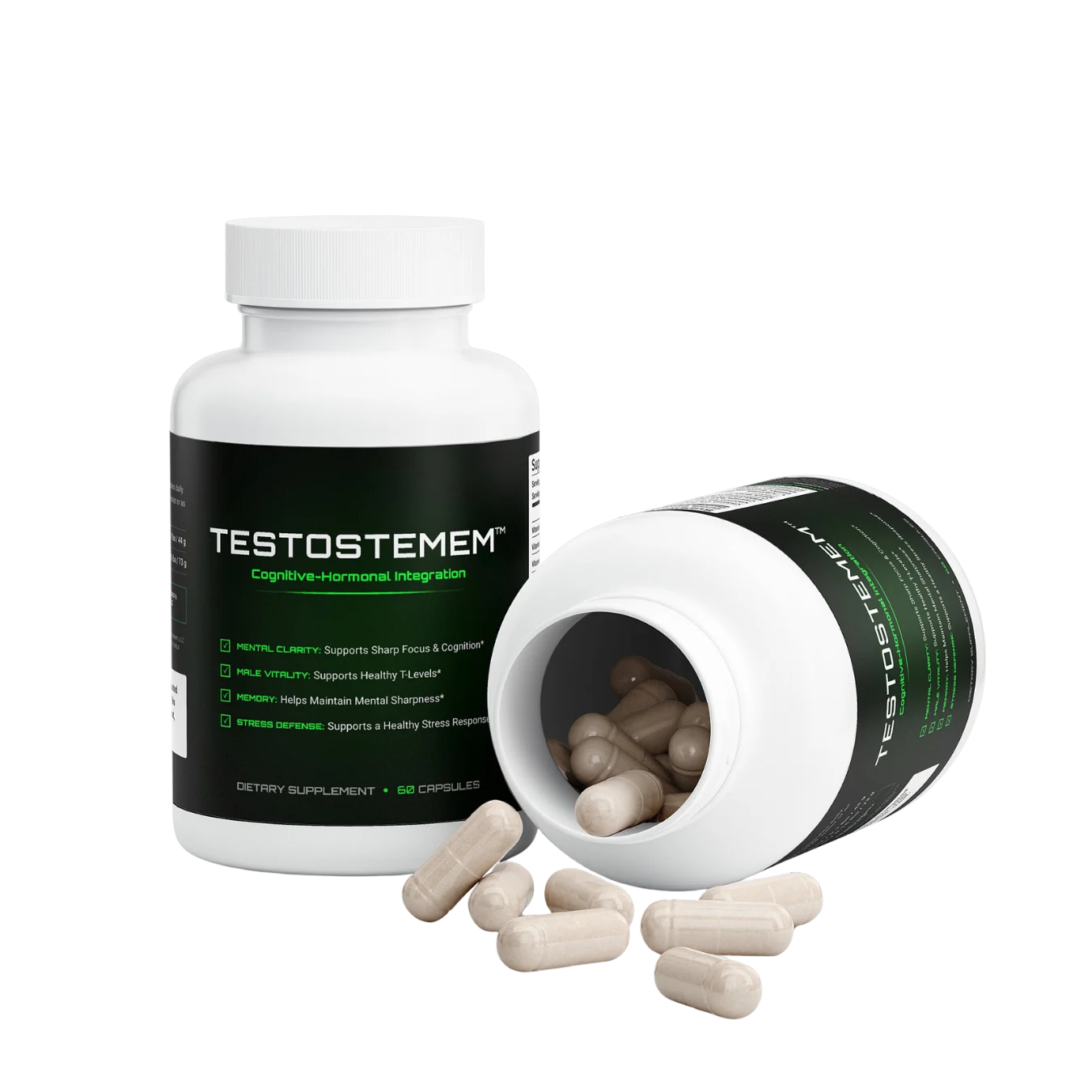
Testostemem puts testosterone and memory in the same daily formula. Its 600 mg KSM-66 serving matches the daily amount in the ingredient trials featured on our science page, including the separate stress study. Read the methods and results alongside the complete ingredient label.
Frequently Asked Questions About Cortisol and Testosterone
Does cortisol lower testosterone?
Sustained excess glucocorticoid exposure can suppress reproductive hormone signaling. Everyday cortisol changes are normal, and stress symptoms alone cannot show whether testosterone is low.
Can lowering cortisol raise testosterone?
Treating a cause that suppresses testosterone may help, but lowering cortisol does not guarantee a testosterone increase. Address persistent symptoms and any confirmed condition directly.
How does cortisol cause brain fog?
Stress can affect attention, sleep, and memory processing. Cortisol participates in that biology, but brain fog has many possible causes and is not a reliable sign of high cortisol or low testosterone.
How long does it take to lower cortisol and raise testosterone?
There is no universal timetable. Sleep, stress, and hormone measurements may change at different rates depending on the cause, treatment, and individual.
Does ashwagandha lower cortisol?
Some ashwagandha trials in stressed adults report reduced cortisol. In the 60-day KSM-66 trial discussed here, the reduction was 27.9% versus 7.9% with placebo. That result does not establish that all users will have the same change.
KEEP READING
Sources & further reading.
TESTOSTERONE + MEMORY
Sharp mind.
Strong drive.
Testostemem brings eight ingredients together for testosterone and memory. Two capsules a day. That's it. No worries.
GET TESTOSTEMEM 60-day money-back guarantee on your first order.