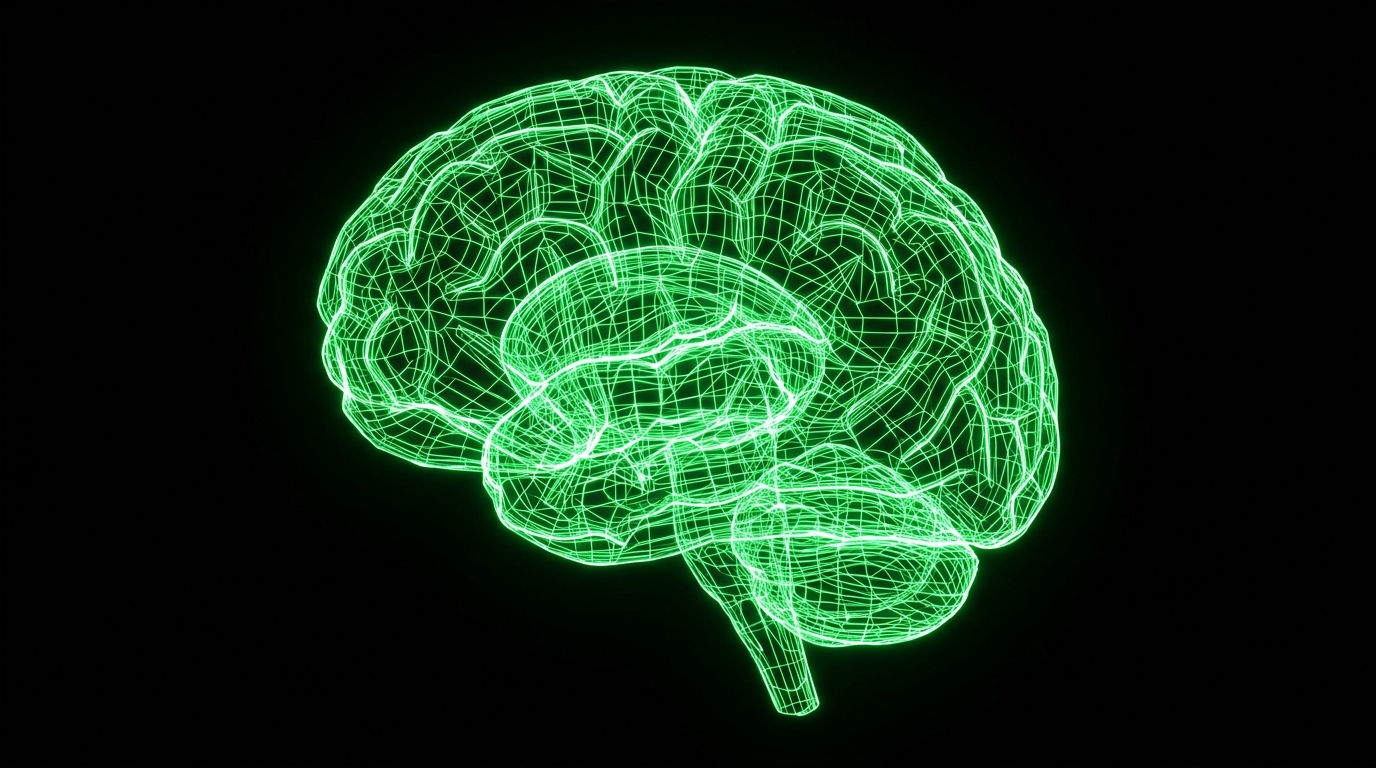
Most men blame age, stress, or poor sleep when their memory starts slipping. They forget names mid-sentence. They walk into rooms and forget why. They lose their train of thought in meetings. What very few of them know is that the testosterone–memory connection is one of the most established — and most ignored — drivers of cognitive decline in adult men.
Testosterone isn't just a sex hormone. It's a neurosteroid. Your brain has testosterone receptors in the exact regions responsible for memory formation, recall, and processing speed. When testosterone drops, those regions stop firing the way they're supposed to. The result is what most men dismiss as "getting older" — but is actually a reversible, hormone-driven memory problem.
This article breaks down how testosterone affects memory, the signs that low testosterone is behind your brain fog, and what you can do about it.
How Testosterone Affects Memory and Brain Function
Testosterone interacts directly with the hippocampus — the part of the brain that handles short-term memory, spatial memory, and learning. Androgen receptors are densely concentrated there, which means testosterone levels directly shape how well that region performs.
When testosterone is at healthy levels, it supports:
- Synaptic plasticity — the brain's ability to form and strengthen new connections, which is the biological basis of memory.
- Neuroprotection — testosterone helps shield neurons from oxidative stress and inflammation, both of which accelerate cognitive decline.
- Neurotransmitter balance — testosterone influences dopamine and acetylcholine, which govern focus, motivation, and recall.
- Cerebral blood flow — adequate testosterone correlates with better blood flow to memory-related brain regions.
When testosterone falls below optimal range, every one of these systems weakens. The connection between testosterone and memory isn't theoretical — it's mechanical.
Signs Your Memory Problems Are Caused by Low Testosterone
Low testosterone memory loss doesn't show up the way Alzheimer's does. It's quieter, more subtle, and easy to write off. Common symptoms include:
- Brain fog — that "thick" feeling where you can't think clearly, especially in the afternoon.
- Word-finding problems — knowing exactly what you mean but not being able to retrieve the right word.
- Short-term memory slips — forgetting where you put your keys, what you walked into a room for, or what someone just told you.
- Slower processing speed — taking longer than you used to in order to absorb information or solve problems.
- Difficulty concentrating — getting distracted easily, struggling to stay locked in on a single task.
- Reduced mental stamina — your brain "tires out" earlier in the day than it used to.
If you're experiencing several of these together — especially alongside fatigue, lower libido, or loss of motivation — testosterone is the variable to investigate first.
The Science Behind Testosterone and Memory Loss
Research over the past two decades has consistently linked low testosterone with cognitive decline. Older men with low testosterone show measurably worse performance on verbal memory, spatial memory, and executive function tests than men with healthy testosterone levels. Studies of men undergoing androgen-deprivation therapy show clear declines in memory and executive function — direct evidence that lowering testosterone lowers cognitive performance.
The mechanism makes sense. Testosterone supports the production of brain-derived neurotrophic factor (BDNF), a protein critical for the survival and growth of neurons. Lower testosterone means lower BDNF. Lower BDNF means a brain that's less capable of forming and holding memories.
This is why testosterone and memory loss tend to track together as men age. By the time a man hits his mid-40s, his testosterone has typically dropped 1–2% per year for over a decade. That cumulative decline shows up as the cognitive symptoms men commonly chalk up to "just getting older."
Why Testosterone Levels Decline with Age
The decline in testosterone with age is driven by several factors stacking on top of each other:
- Leydig cell aging — the cells in the testes that produce testosterone become less efficient over time.
- Increased SHBG — sex hormone-binding globulin rises with age, locking up free testosterone and making less of it bioavailable to tissues including the brain.
- Visceral fat accumulation — body fat converts testosterone into estrogen via the aromatase enzyme, accelerating the drop.
- Poor sleep, chronic stress, and sedentary lifestyle — each of these independently suppresses testosterone production.
The combined effect is a steady downshift in both total and free testosterone — and a parallel downshift in cognitive performance.
How to Improve Memory by Optimizing Testosterone
The good news: most men can meaningfully improve testosterone — and memory along with it — through targeted lifestyle and supplementation. Key levers:
- Strength training — heavy compound lifts (squats, deadlifts, presses) reliably raise testosterone in the short and long term.
- Sleep — most testosterone is produced during deep sleep. Consistent 7–9 hours is non-negotiable.
- Diet — adequate protein, healthy fats (especially saturated and monounsaturated), zinc, magnesium, and vitamin D are all required for testosterone synthesis.
- Stress management — chronic cortisol directly suppresses testosterone production.
- Body composition — reducing visceral body fat reduces aromatase activity and protects testosterone from being converted to estrogen.
- Targeted supplementation — specific compounds support the body's natural testosterone production and can be a strong complement to the lifestyle inputs above.
Natural Testosterone Support for Better Memory and Cognitive Function
Testostemem was formulated specifically around the testosterone–memory connection — supporting healthy testosterone levels in men who want sharper recall, clearer thinking, and the cognitive performance they used to take for granted. The formula is built on ingredients with documented effects on both endogenous testosterone production and cognitive function, so you're addressing the hormonal cause and the cognitive symptom at the same time.
If you're a man in your 30s, 40s, or 50s and your memory isn't what it used to be, testosterone is the first place to look. Test your levels, fix the lifestyle inputs, and support the system with the right tools.
Frequently Asked Questions About Testosterone and Memory
Does low testosterone cause memory loss?
Yes. Testosterone directly supports memory-critical brain regions, and low testosterone is consistently associated with declines in verbal memory, spatial memory, and processing speed.
Can raising testosterone improve memory?
For men with low testosterone, restoring levels to a healthy range is associated with measurable improvements in memory and cognitive function.
At what age does testosterone start affecting memory?
Testosterone typically begins declining in the late 20s to early 30s. Cognitive symptoms often become noticeable in the 40s and 50s as the cumulative drop reaches a meaningful threshold.
What's the difference between brain fog and testosterone-related memory loss?
Brain fog is one symptom of low testosterone memory loss — alongside word-finding problems, short-term memory slips, and reduced mental stamina. They're often the same underlying issue.